
Preserving your Family History: One story at a time.
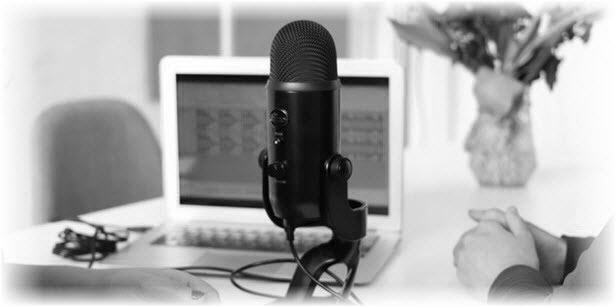
“One of the major issues throughout oral history’s practice, and something that has almost served to define its various phases, has been how an oral history has been represented as an entity” (Boyd, 2014, p. 1). While oral history in the United States has its roots in the Appalachian Mountains region, the Native Americans have preserved their family stories and tales through oral accounts for thousands of years. Families have been keeping and telling stories as long as there have been families.
This information is designed to introduce you to the craft of preserving your family’s oral history by interviewing and recording a member of your family; parents, grandparents, great-grandparents, and other elder relatives.
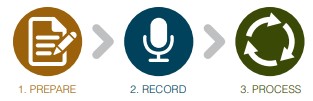
Everyone has a story, and I hope you are inspired to preserve a few of your family’s tales through the oral history process of Preparing, Recording, and Processing:
Prepare. There are many possibilities for using oral histories to document your family history. Consider narrowing your focus to current events in history such as a weather element, war, cooking, arts & crafts, or a community event. This way, if you interview multiple family members to capture their oral history, it can be a themed collection such as hunting, a significant weather event such as a flood, or a war event such as WWII.
You will want to prepare an Interview Outline so your interviewee will be comfortable with the topic, format, and questions. An outline will also help to stay on the theme you have chosen, but keep in mind it is not intended to limit your interviewee responses. You want the conversation to flow freely and comfortably. Using open-ended questions that encourage the expression of stories and ideas is a good approach when framing your questions.
During my Family Oral History workshop, I will provide examples and practice framing an interview outline.

Record. Once you have completed your interview outline, you will use a recording device to record your family member. Not everyone is comfortable with microphones or recording devices, as it can feel more like an interrogation than preserving one’s story. It is essential to set the interviewee at ease by recording in a familiar setting so that they fully understand the process. This should be an enjoyable time for them to share their stories. Let them know that you will be taking notes as well as recording. Be sure to test all of the technology prior to beginning as you do not want to waste their time with faulty tools for recording.
As the interviewer, you may feel compelled to be the one talking. Do not dominate the conversation. Be patient and let your family members share. You often learn more than what you had considered, making for a more natural story that unfolds. Guide the conversation, but do not dominate the conversation.
During my Family Oral History workshop, I will provide you with opportunities to record and practice as both interviewer and interviewee.
Process. This is where the recording, the spoken word, is transcribed into an oral history document. While this may seem straightforward, your listening, writing, and editing skills will be challenged, as this is a very detailed process.
The spoken word is very different from the written word.
During my Family Oral History workshop, this is where we spend the bulk of the time. During the workshop, you will be introduced to transcribing, word lists, Common (and Not‐So‐Common) Pitfalls, abbreviations, adding comments, coined words, colloquialisms, crutch words, dialect, false starts, feedback words, incomplete sentences, neologisms, profanity slang, and proofreading.

Subscribe to my website on the Let’s Connect page, and you will receive a complimentary ‘How to’ guide for getting started in oral history, as well as email updates for scheduled workshops, both face-to-face and virtual settings.
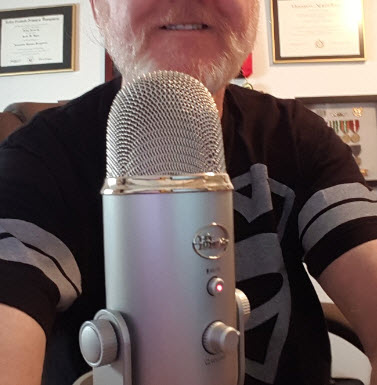
“Oral history is a creative practice” (High, 2021. p.28). Be Creative. Let your creativity flow as you may be pleasantly surprised at what you find, and the history you make!

Annotated Bibliography:
Boyd, D. A., & Larson, M. (2014). Oral history and digital humanities : voice, access, and engagement (First edition.). Palgrave Macmillan.
https://ebookcentral-proquest-com.ezproxy.snhu.edu/lib/snhu-ebooks/reader.action?docID=1953056
Summary: This is an academic book with many authors contributing. Boyd and Larson are the editors. The goal of the book is to explore oral history since video and digital technologies were introduced. It is very relevant as it reviews several groundbreaking projects in the history of digital oral history, to include pioneers in this field. As to the strengths, weaknesses, or biases; this was peer reviewed word in an academic setting.
Dodd, L. (2021). The disappearing child : observations on oral history, archives and affects. Oral History, 49(2), 37–48. https://www-jstor-org.ezproxy.snhu.edu/stable/48670156
Summary: This article focus on archiving and affects of oral history. It is relevant as the article brings about the delicacy of that is needed in keeping the stories true and relevant to those being interviewed. As to the strengths, weaknesses, or biases; there may be a bias as the subject matter was delicate and sensitive to children in France during WWII. But its strength is that oral history helps them to remain and their voices heard.
English, A. (2021). Alternative Application of Oral History in the Secondary Classroom. Educational Considerations, 47(2). https://eds-p-ebscohost-com.ezproxy.snhu.edu/eds/pdfviewer/pdfviewer?vid=1&sid=5c03fc1d-3f7d-4fa1-86e1-85607c33636d%40redis
Summary: This article looks a oral history as more engaging alternate than the written word in the high school setting. There is supporting relevance to the topic as it explores oral history as teaching tool. As to the strengths, weaknesses, or biases; a strength was that all of the oral history topics were data driven and not merely a qualitative review. A potential weakness was that it was finite in the technologies, new or otherwise that were being used to present the oral history information.
Gómez, M., & Nogar, A. M. (2021). Forming Oral History Researchers: Diversifying and Innovating Honors Experiential Learning across Campus. Honors in Practice, 17, 97–107. https://eds-p-ebscohost-com.ezproxy.snhu.edu/eds/pdfviewer/pdfviewer?vid=1&sid=5ef2bc48-4d24-470e-b9c4-413455ddff18%40redis
Summary: This article focuses on the tenets of experiential learning as mode of discourse, using trained oral history methodologies and integrated IRB certified researches. It is very relevant as it applies oral history as means to promoting experiential learning. As to the strengths, weaknesses, or biases; there do not appear to be concerns as appears to be a study housed within an academic setting that has an IRB review committee.
High, S. (2021). Oral History as Creative Practice at Concordia University’s Centre for Oral History and Digital Storytelling. Bulletin de l’AFAS, 47, 1–16. https://eds-p-ebscohost-com.ezproxy.snhu.edu/eds/pdfviewer/pdfviewer?vid=1&sid=908f663a-3ee1-4b43-b49f-420fa2908693%40redisRitchie, D. A. (2015). Doing oral history (Third edition.). Oxford University Press.
Summary: This study looks at oral history as a Creative Practice within the field of research. It attributes oral history to that of being housed within the history discipline and deserving of more scholarly interests. Concord University has a Center for Oral History and Digital Storytelling which if very relevant to this topic. As to the strengths, weaknesses, or biases; the study is heavy on the scholarly and research of side of the creative practice of oral history
Sheldon, B., & Stewart, S. (2022). Military Operations Research Society (MORS) Oral History Project : Ms. Renee G. Carlucci, FS. Military Operations Research, 27(4), 91–110. https://eds-p-ebscohost-com.ezproxy.snhu.edu/eds/pdfviewer/pdfviewer?vid=1&sid=9f46163e-0f25-4442-abb9-ca902d32086c%40redis
Summary: This is an example of an oral history project with the focus being on Military Operatios, through the Military Operations Research Society (MORS). It is very relevant as it is a working example of the value of oral history in conducting recollections and interviews.. As to the strengths, weaknesses, or biases; the MORS person interview was an operation research analyst and tis speaks to the strength of the information.
Teuscher, C. (2022). History While It’s Hot: How a Group of U.S. Army Combat Historians Helped Preserve the GI’s Perspective in Europe during World War II. Military Review, 102(3), 114–125. https://eds-p-ebscohost-com.ezproxy.snhu.edu/eds/pdfviewer/pdfviewer?vid=1&sid=8dbb677e-a1f1-494f-88a1-6169a8e6ef03%40redis
Summary: This was an oral history project conducuted by Army Combat Historians with the goal of preserving World War II service members’ experiences. It is relevant as professional historians took on the task of utilizing oral history as a means of documenting history. As to the strengths, weaknesses, or biases; the relevance is also a strength. As well, one should assume that there will always be a bias from the lens of the person telling the story, as it is their recollection, their accounting of how things happened. This bias is not unique to this project and should be applied to all oral history interviews.
Thomas, B. (2021). When work is history and history is work: museums, oral testimonies and authenticities. Oral History, 49(1), 125–135. https://www.jstor.org/stable/48636522 Summarize: While the article is about museums the focus is on the use of oral history testimonies to enable museums to better interpret the meaning of the artifact or material of work to be better understood by the community, and national interests. Historically, museums have relied more on the importance of the artifact itself. Assess: The Author Beth Thomas, in 2019, first presented her ideas in the article for the Oral History Society conference. Her point of view comes from more than 40 years as a museum practitioner focusing on oral archives and material collections. This is my first collection in my annotated bibliography and I think its value is that it comes from the established setting of the museum field and brings validity to the craft of oral history. Reflect: It will fit nicely into my research of oral history and new media as we must look back in history if we are to plan a future in with oral history at the center of new media. I like the idea of establishing oral collections with a museum setting as that field is based in the art of collecting and maintaining artifacts, audio or otherwise.

